
 Українська
 Deutsch
 Polski
 Română
 עברית
עברית Русский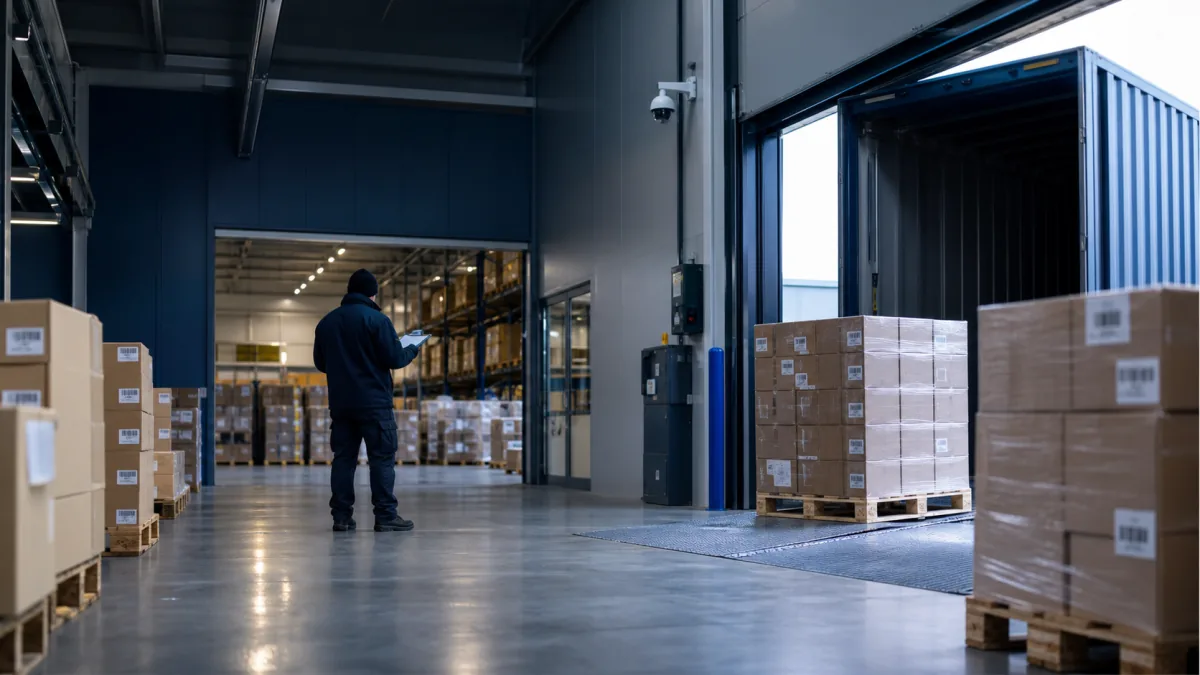
Stock discrepancies are often discovered long after the physical handover of goods. Video may show unloading, counting and movement, but footage alone does not explain the cause of a shortage or prove that a particular person is responsible.
Control therefore begins with one defined question. For example: was a pallet transferred from unloading to receiving only after a visible quantity and condition check? The event, acceptable exceptions and required context are agreed before the pilot starts.
Camera suitability is checked next: are the goods, control zone, handover actions and time sequence visible? If the load is obscured, labels cannot be read or part of the process happens outside the frame, the material must not be presented as complete evidence.
AI pre-analysis can help locate the relevant time window, pallet movement or presence in the control zone. It produces a candidate for review. AI does not know the contents of a delivery note, confirm the actual quantity or establish intent.
A specialist reviews the sequence before, during and after the handover, considers visible exceptions and compares the event with the agreed rule. The result is classified as a confirmed deviation, normal exception, disputed case or material that cannot be assessed.
The event card records the site, zone, time, control point, short description, frames, video link and evidence level. The inventory system remains the source of record for quantities and documents; video adds verified visual context.
Management action depends on the cause: clarify the handover procedure, change zone markings, train the team, improve camera coverage, separate responsibilities or review repeated cases. The objective is to repair a weak process, not to produce more accusations.
A safe pilot covers one to three locations, one control point and a limited period. It evaluates confirmed events, false candidates, unusable views and actions actually completed. E.V.A.S. does not promise to explain every warehouse discrepancy automatically.