






Margin rarely disappears in one dramatic incident. It usually leaks away in small events: an item handed over without being entered at the till, an oversized portion, an incorrect write-off, a late employee, an idle workstation or a customer who leaves before being served. Across a month and multiple locations, small losses become material profit erosion.
Margin is therefore created not only through purchasing and pricing, but through analysis of daily operations: where revenue is missed, where cost of goods rises, where paid time produces no result and where a written standard is not followed in practice.
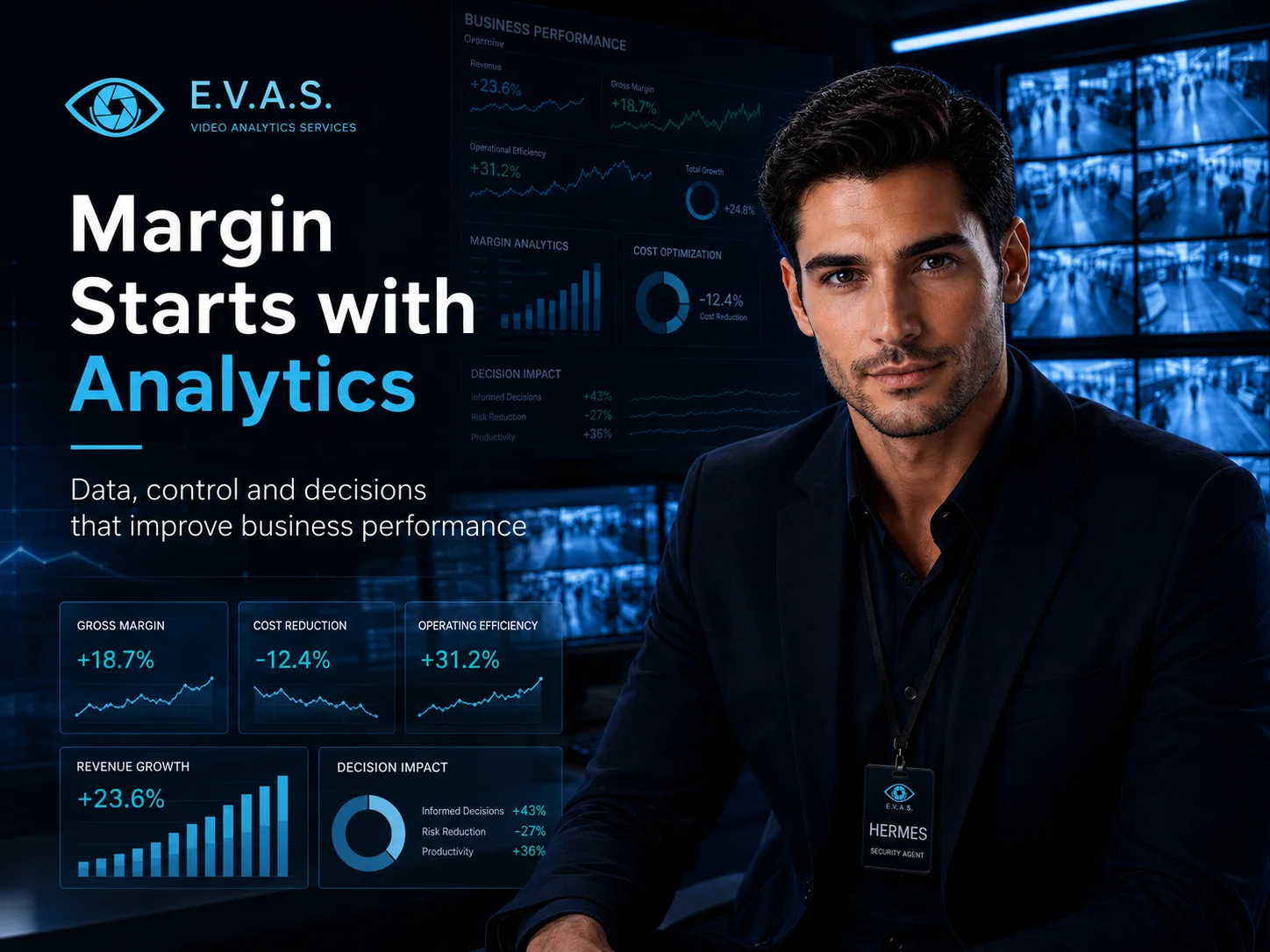
Most businesses already have CCTV, yet use it only after a problem. EVAS turns existing cameras into a continuous source of management data. The value is not raw footage, but repeatable events that can be verified, classified and linked to business indicators.
Processes often look better while a manager is present. After the manager leaves, response times, discipline and handling of stock or cash may change. Cameras allow comparable shifts and hours to be reviewed, while EVAS exposes the difference without requiring the manager to watch archives every day.
Video analysis can reveal missed sales, unexplained till activity, excessive portions, uncontrolled write-offs, poor storage, unauthorised stock removal, lateness, long breaks and idle operational zones.
EVAS does not automatically label every deviation as a proven violation. AI helps locate relevant moments, an operator verifies context, and management receives a structured report explaining what happened, where and when, with supporting images, video and the rule involved.
One event may be accidental. Repetition within a shift, area or process points to a systemic cause. Analytics groups events by site, time and process, turning isolated observations into a map of where money and productivity are being lost.
Economic impact comes from action, not from the number of cameras or alerts. A process is corrected, a loophole is closed, staffing is redistributed, training is delivered, write-off rules are clarified or a high-risk operation receives closer control.
Impact should be measured against a baseline: revenue per shift, average transaction value, write-offs, stock discrepancies, waiting time, idle hours and verified deviations. Comparing equivalent periods and locations shows which changes actually preserve money; it is more credible than promising guaranteed profit.
EVAS creates management presence without requiring constant physical presence. Cameras record, AI assists discovery, people verify context, reports expose patterns and management improves the process. This is how video monitoring becomes a tool for stronger gross margin and business profitability rather than surveillance for its own sake.