
 Українська
 Deutsch
 Polski
 Română
 עברית
עברית Русский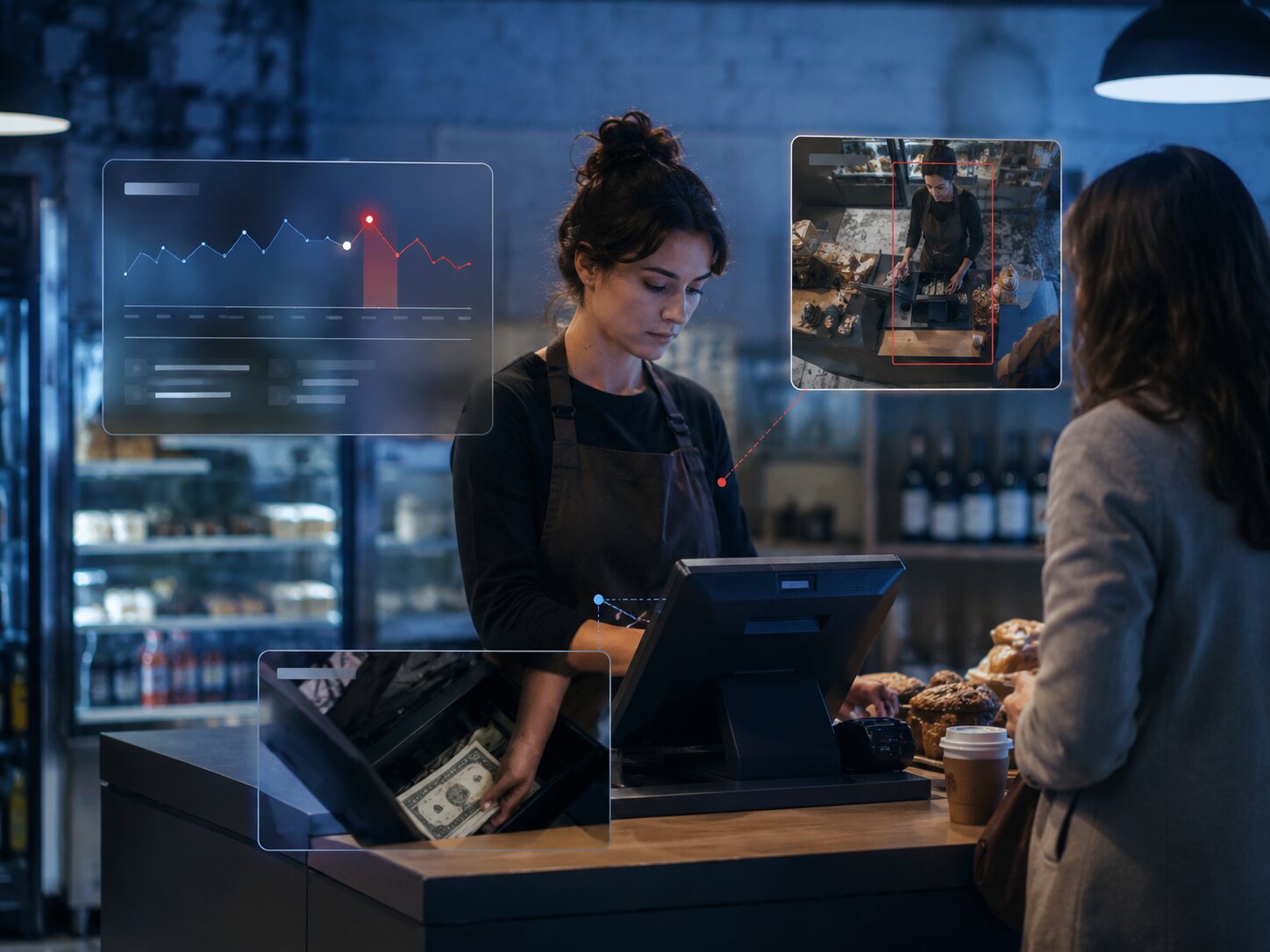
The checkout area is sensitive to false conclusions. A product handed over without a visible scan, a cash drawer opening, a void or an unusual cash movement may have a legitimate explanation. A single frame must therefore not be labelled automatically as theft or misconduct.
The process starts with a defined event and the client’s rule. For example, a visible product is handed to a customer but the available context does not show the corresponding checkout step. If POS integration is agreed, its data is supporting context, not a verdict on its own.
AI pre-analysis helps locate relevant time windows in a large video volume. A person then reviews the sequence before, during and after the event, checking checkout visibility, staff actions and possible exceptions.
Evidence is not a random screenshot but an understandable sequence: location, checkout, date and time, key frames, video link, description of the observed fact and its relation to the agreed rule.
If context is insufficient, the event is marked as disputed or rejected. E.V.A.S. must not turn a technical signal into an accusation and does not promise automatic detection of every form of abuse.
A verified report supports a proportionate action: clarify the process, inspect checkout data, train the team, adjust the control point or pass the material to an internal review. The aim is to correct the cause, not to hunt employees.
A single case matters, but repetition is more informative. Comparing shifts, checkouts and event types helps distinguish an issue with instructions, interface, training, workload or deliberate circumvention of a rule.
A safe pilot starts with one to three checkouts and one or two transparent scenarios. Management approves the criteria and response in advance, then evaluates evidence quality and practical reporting value without unsupported promises of financial results.