






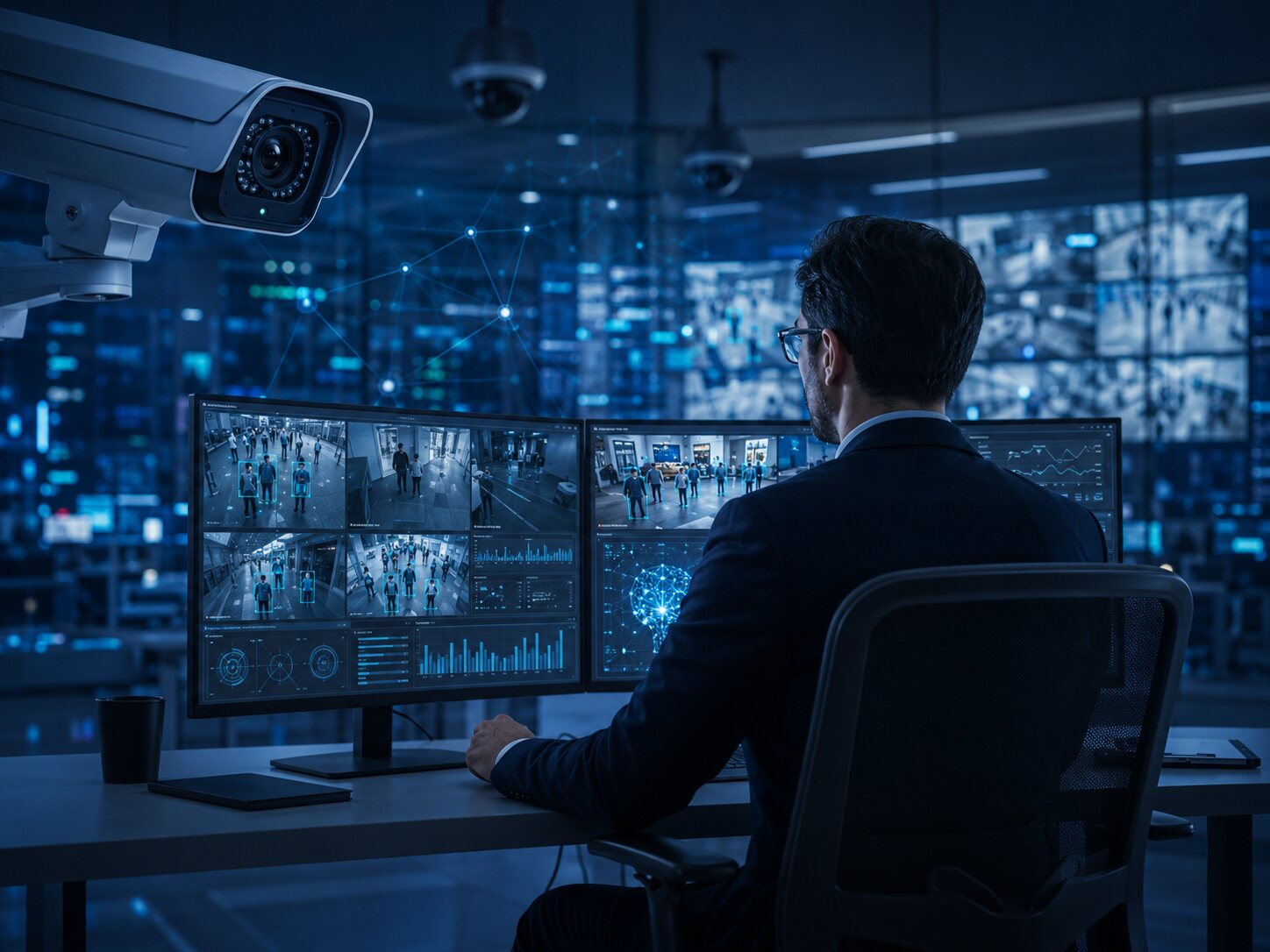
Cameras are infrastructure, not a complete control system. Value begins when the business defines the events that matter: a till deviation, transfer of goods, an unattended position, a storage breach, delayed service or another clear operational scenario.
Coverage must be checked before connection: can the hands and goods at the till, the receiving area, warehouse aisles and workstations be seen; are image quality, archive duration and stream stability sufficient? No algorithm can compensate for a blind spot.
Replacing all equipment is not always necessary. E.V.A.S. first assesses the existing cameras, recorder, available protocols, network, storage and security requirements. Modernisation is proposed only where the current infrastructure cannot provide material that can be verified.
Dahua, Hikvision and other compatible devices may form part of the system, including through ONVIF, if the specific model, firmware and settings fit the task and the client’s security policy. A brand name alone does not guarantee stability, night-scene quality or reliable integration.
The workflow is: camera records a defined event → AI performs pre-analysis and helps locate the segment → a person checks the context → evidence is preserved → a report is produced → management takes a proportionate action. AI accelerates discovery but does not automatically prove a violation.
A practical start is a pilot at one to three locations with two or three rules. After image quality, criteria and report usefulness have been evaluated, management can decide what to scale. E.V.A.S. does not promise that one camera or algorithm will prevent every loss.